LEVEL UP PEST LIBRARY · P027
Amblyomma americanum: look beyond the familiar white spot.
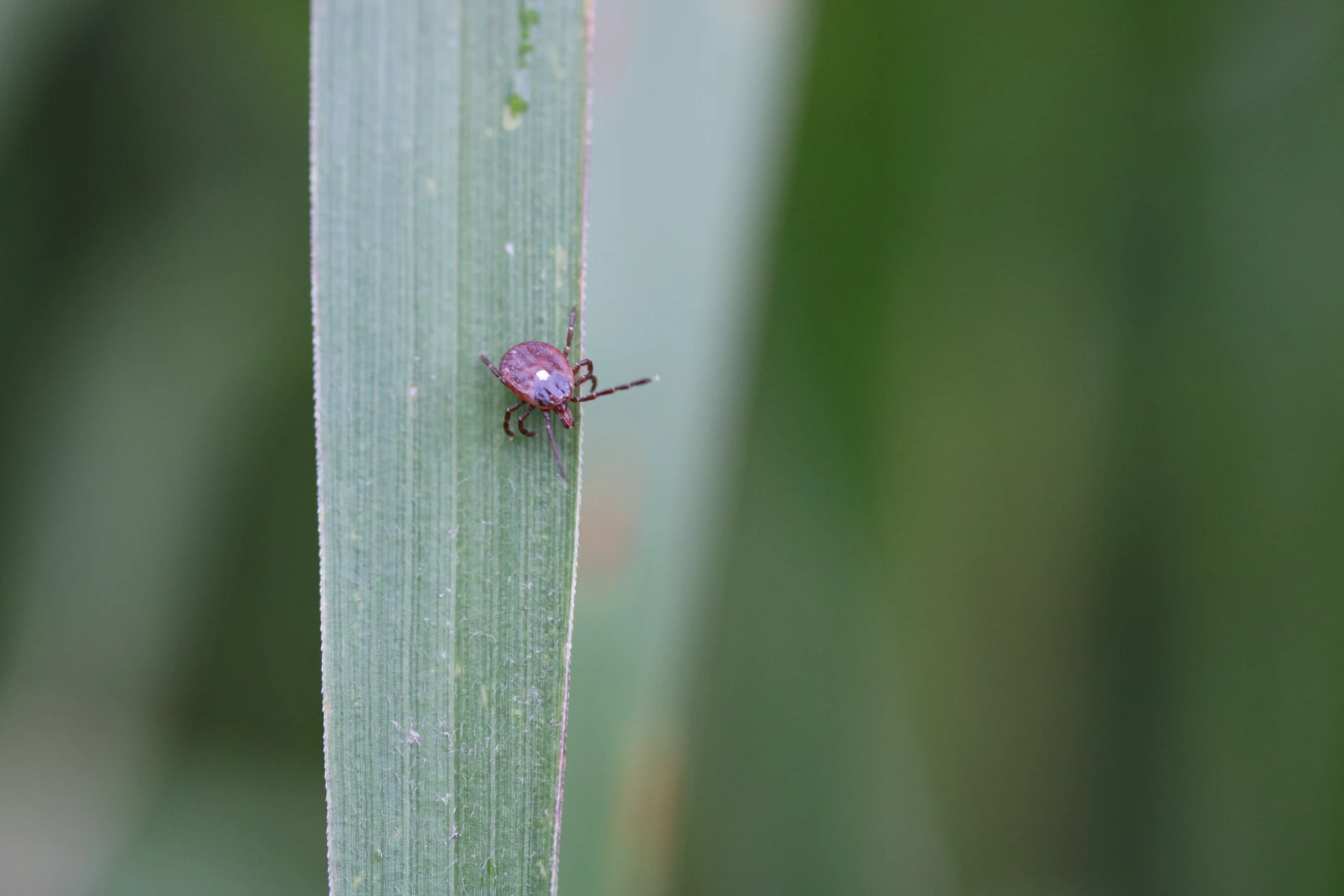
Photo: NIAID — Original source — CC BY 2.0. Proportional resize and WebP conversion only; no crop or retouching. Metadata stripped.
The adult female’s central pale spot is a useful clue. Males have several pale markings instead; immature stages do not carry the characteristic female spot. A tick without one dot may still be a lone star tick.
The NIAID photograph preserves the specimen and vegetation context. It is not shown at life size. Compare the whole body rather than treating any pale reflection as a diagnostic mark.
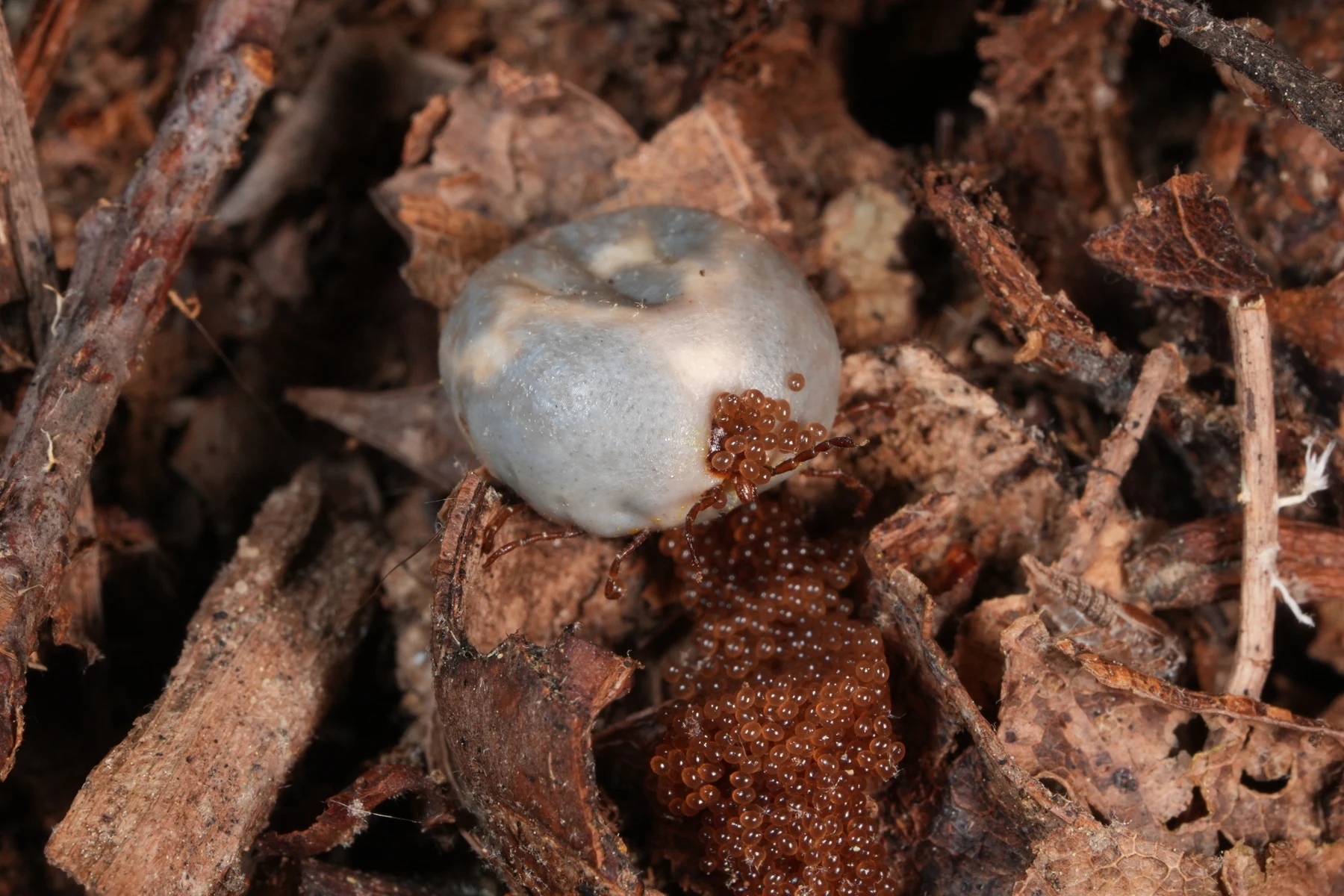
Photo: Gamfeld — Original source — CC0 1.0. Proportional resize and WebP conversion only; no crop or retouching. Metadata stripped.
The small six-legged larvae are sometimes called seed ticks. Eight-legged nymphs follow, then adults. These stages do not all look like smaller versions of the spotted female.
Each feeding stage uses a host, with development occurring between meals. The engorged female with eggs illustrates reproduction after feeding; it does not imply that all ticks on clothing are egg-bearing adults.
Lone star ticks are relevant in Virginia’s Coastal Plain and Piedmont. Leaf litter and partly shaded vegetation can provide host-seeking settings. They can actively seek hosts as well as wait for contact.
Adults are commonly active from late winter into early summer, with nymphs important later in spring and summer. Weather and stage influence activity; these broad patterns do not establish a safe date or a particular property’s population.
Lone star ticks can carry Ehrlichia bacteria that cause ehrlichiosis. Alpha-gal syndrome is different: an allergic condition associated with tick bites, not an infection passed from person to person. Not everyone bitten develops it.
A rash after a lone star bite may be described as STARI, whose cause is uncertain. Do not diagnose the cause from a rash photograph. A clinician should assess symptoms, and severe allergic symptoms require emergency care.
Do not apply substances or heat to force detachment. For symptoms or treatment questions, contact a healthcare professional. Use the CDC instructions linked below for removal and follow-up.
A tick brought indoors on an animal or clothing does not by itself establish an indoor breeding infestation. Wildlife movement and activities away from home can also matter. Record repeated findings and their locations before attributing them to one patch of lawn.
No. The single spot describes the adult female. Adult males and immature ticks have different appearances.
The term commonly describes very small tick larvae. It does not establish species; lone star larvae are six-legged and need identification beyond their small size.
No. Alpha-gal syndrome can follow certain tick bites, but not every bitten person develops it. A healthcare professional diagnoses and manages the condition.
No. STARI is a rash illness associated with lone star bites with an uncertain cause. It should not be treated as an interchangeable diagnosis for Lyme disease.
A blood meal enlarges the body. This specific reference also shows eggs after feeding. Neither swelling nor eggs establish whether a person was infected.
Remove an attached tick promptly; do not wait to photograph it. If you already have a clear image, include where and when it was found. Keep the original photograph: body shape, mouthparts, markings, sex and life stage may matter more than color. A distant image or a bite mark cannot reliably establish the species.
Level Up can help with preliminary pest identification and property concerns. Medical symptoms and decisions belong with a healthcare professional, and animal care belongs with a veterinarian. Photograph review is not a disease test.
Photographs are scientific references, not Level Up field records. Images are enlarged and are not displayed at a common physical scale. Original-source and license links accompany each image; select a photograph to inspect the larger reference. No image is evidence that a particular customer property contains that species.


