LEVEL UP PEST LIBRARY · P025
A jumping insect, dark specks in pet bedding, and an itchy animal are different observations. Connecting them takes more than matching a bite photograph. This guide explains what to look for, how flea life stages differ, and why the animal and its surroundings belong in the same conversation.
The cat flea, Ctenocephalides felis, is a useful household reference because it can affect both cats and dogs. These enlarged photographs document identified specimens or evidence, not Level Up customer properties. Images are not displayed at a common physical scale.
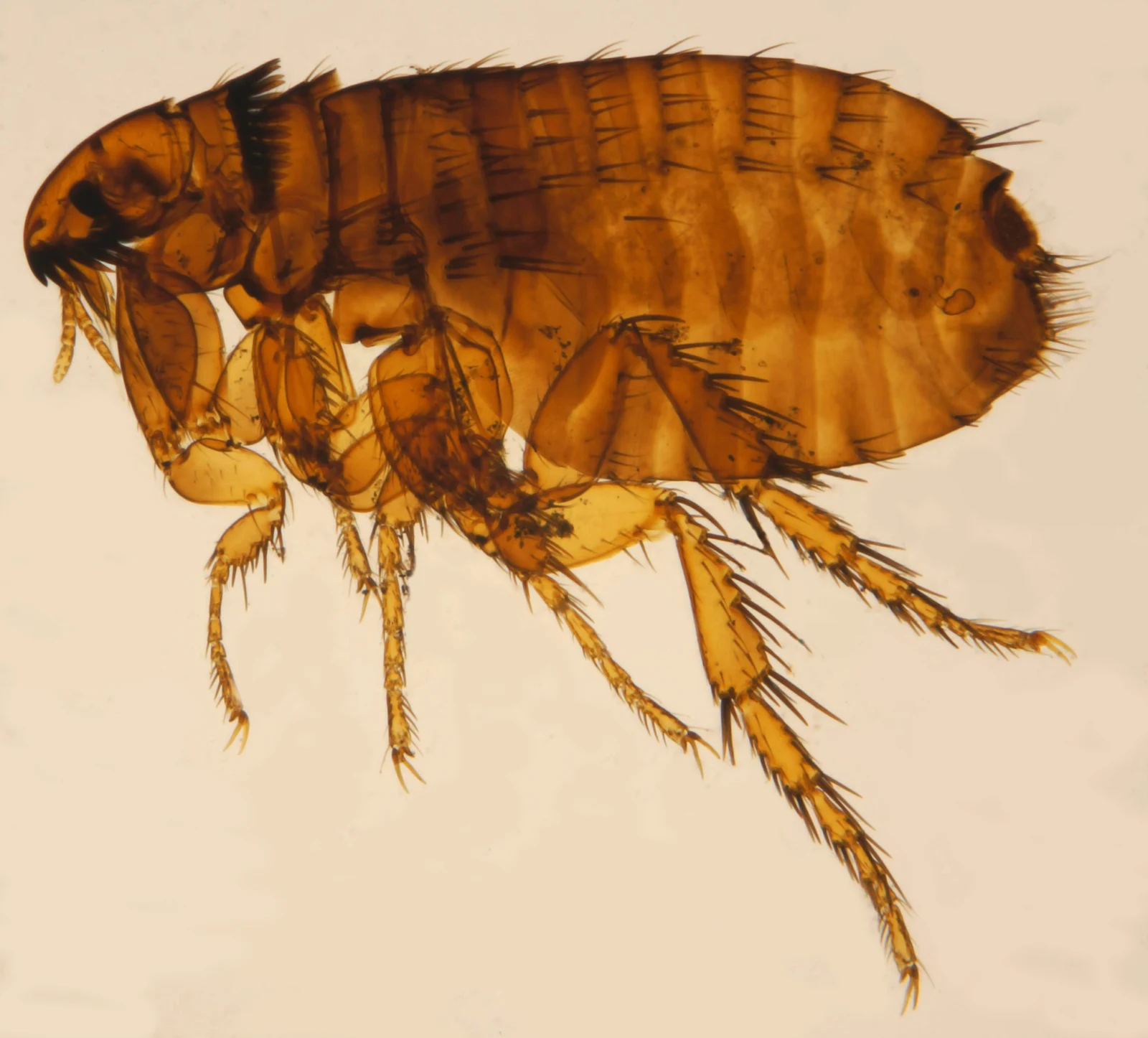
Adults are small, wingless, and flattened from side to side, with strong hind legs for jumping. Their narrow shape and movement can make a quick sighting difficult to interpret. Feeding adults use animal hosts for blood meals.
This preserved female cat flea is shown enlarged. Distinguishing flea species may require close examination; a dark jumping speck is not a complete species identification.

Flea dirt is fecal material from feeding fleas and contains blood from their meals. It may be noticed in fur or where an animal rests. This reference documents cat flea excrement under magnification.
Do not assume every dark speck is flea dirt. Describe the material and its location without rubbing, tasting, or unnecessarily handling it. An animal’s itching alone also has other possible explanations.
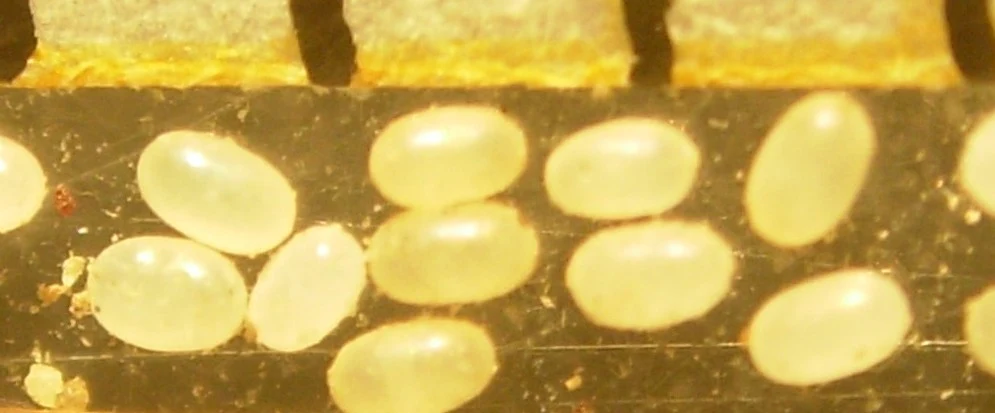
Small, pale eggs can fall from an animal into its surroundings. The source photograph identifies these as cat flea eggs and includes a millimetre scale; the display on your screen is enlarged.
Ordinary debris can look similar. A photograph of a pale speck without useful detail cannot establish an egg identification.
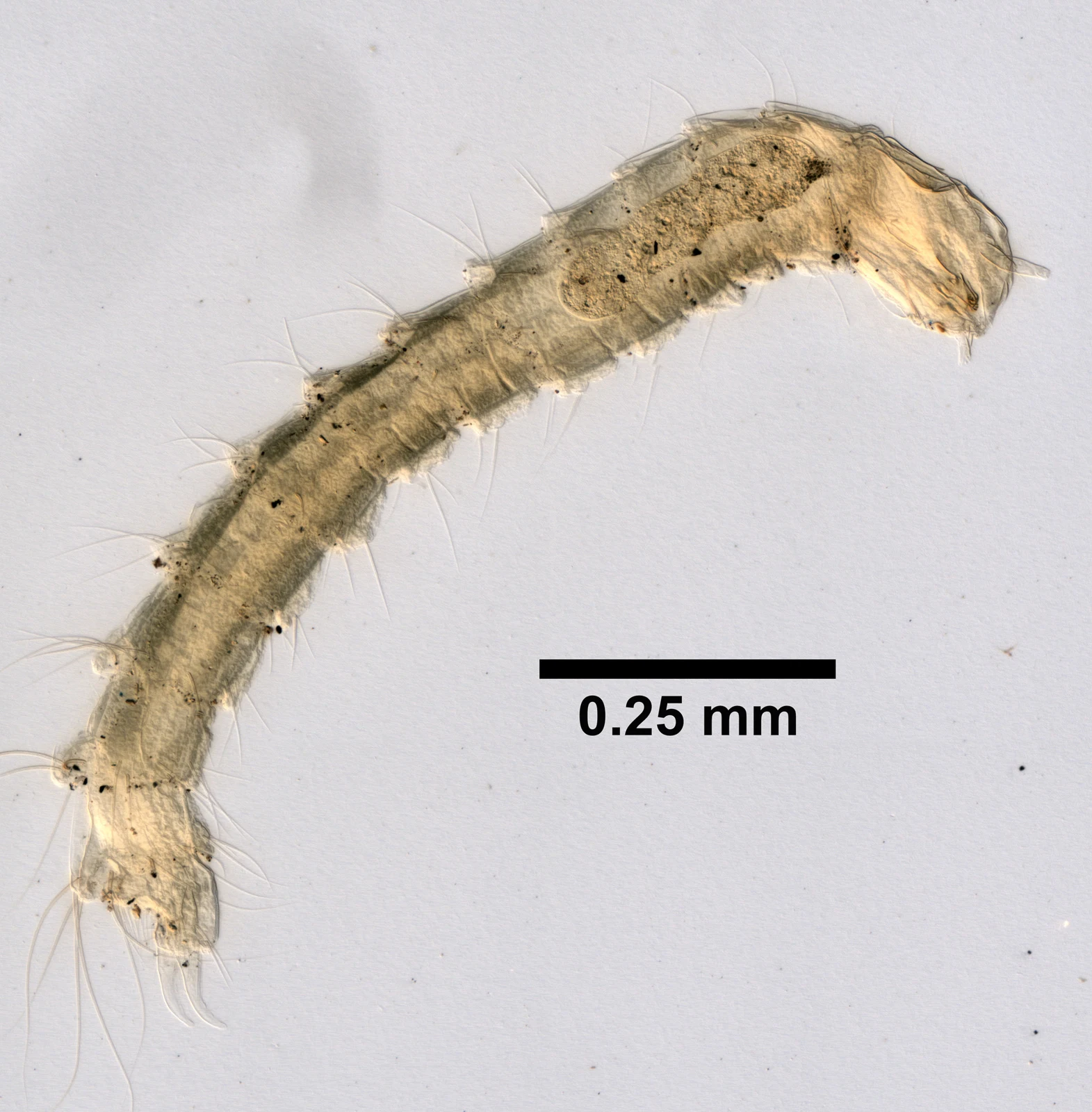
The larva looks wormlike rather than like a miniature jumping adult. Larvae develop away from the host in protected surroundings and feed on material that includes adult flea feces.
This is a magnified, prepared museum microslide from Yale Peabody Museum, specimen YPM IZ 099582. Its appearance and scale differ from a casual household view.
A larva forms a cocoon before becoming a pupa. Development and emergence depend on conditions; the cocoon offers protection, and new adults may appear after visible adults have been addressed.
Continued sightings deserve a review of the whole situation, not an automatic conclusion that nothing worked. There is no universal elimination deadline.
Start with places animals actually use: pet bedding, carpet, upholstered furniture, and sheltered floor areas. Outdoor resting locations can also matter where hosts and suitable conditions coincide.
A pet in the home does not establish an infestation. Record where an insect was seen and where animals rest; do not assume every room or the entire yard is affected.
The stages do different jobs. Eggs begin development; larvae feed and grow in the surroundings; pupae transform within cocoons; adults seek a host and feed. What you see on an animal is therefore only one part of the picture.
Temperature, humidity, and host availability influence what happens next. A single cleaning session may not reach every developing flea. A coordinated plan considers the pet, the environment, and follow-up observations instead of relying only on a count of visible adults.
The name “cat flea” does not mean cats are the only hosts. Both dogs and cats can carry this species. Veterinary advice is important because an appropriate prevention approach depends on the individual animal; this page does not prescribe a product or dose.
Housekeeping is not a diagnosis. A tidy home can encounter fleas, and a home without resident pets may still have relevant animal exposure. Report visiting animals, previous pet occupancy, or evidence of wildlife without assuming any one explanation.
For outdoor concerns, focus on the places animals use and the evidence present. Exposure outdoors and development indoors are related possibilities, not proof that the same condition exists across the property.
Persistent skin symptoms belong with a veterinarian or clinician as appropriate. Neither an itchy animal nor a particular pattern of human skin marks reliably identifies the pest.
Adult fleas jump and are often associated with animal hosts; immature fleas develop in the surroundings. Bed bugs do not jump and commonly shelter near places where people rest. Both can be associated with skin reactions, but bite appearance cannot reliably distinguish them.
Describe movement, body shape, location, and physical evidence. Do not force an uncertain finding into one of these two categories. Other insects and non-pest causes may need consideration.
Developing stages can remain in protected places, and adults may emerge later. Review the locations of sightings, pet care, and environmental conditions together. Continued activity calls for assessment rather than a promised countdown.
Yes. The cat flea can occur on both. A veterinarian should advise on each animal’s care; a product suitable for one pet is not automatically appropriate for another.
It is fecal material produced by feeding fleas and contains blood from their meals. Dark specks alone are not conclusive. A clear photograph and the surrounding evidence can help narrow the possibilities.
Eggs can fall into areas used by the host. Larvae develop off the animal in protected surroundings. Bedding, carpet and sheltered floor areas can therefore matter even when the most obvious adults are on a pet.
Seek help when identification is uncertain, activity persists, or the affected areas are difficult to assess. Bring observations about animal activity and previous efforts. Pet health and prevention should remain coordinated with a veterinarian.
Send an original photograph with a brief note about its location and any animal activity nearby. A photograph may support preliminary identification without resolving the species. Do not disturb an animal or handle unknown material just to improve the image.
Creator and license links appear beneath each photograph. Copies are resized proportionally where needed and encoded as WebP, without cropping or retouching. ShareAlike conditions concern the applicable images and copyrightable adaptations, not the entire website. These are third-party reference photographs, not Level Up field records.


