PEST LIBRARY · P012
Reticulitermes flavipes — recognizing castes and interpreting evidence.
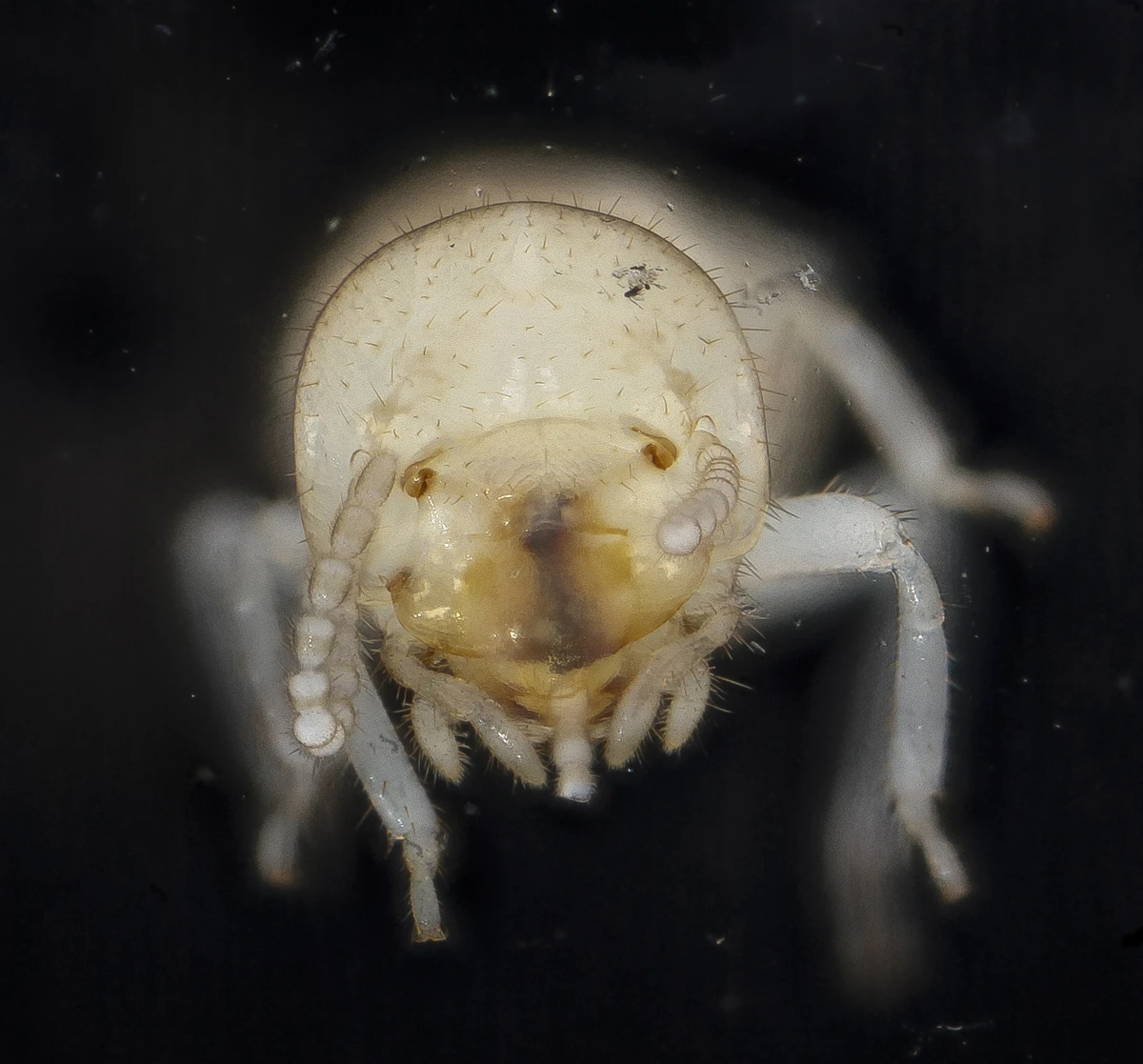
Photo: USGS Native Bee Inventory and Monitoring Laboratory · Source · Public domain. Resized where needed and converted to WebP; no additional crop.
The pale, wingless workers forage, feed other colony members and maintain the colony’s sheltered routes. Their soft bodies are usually hidden from view. This close-up is a preserved worker specimen, not a live insect photographed in a home.
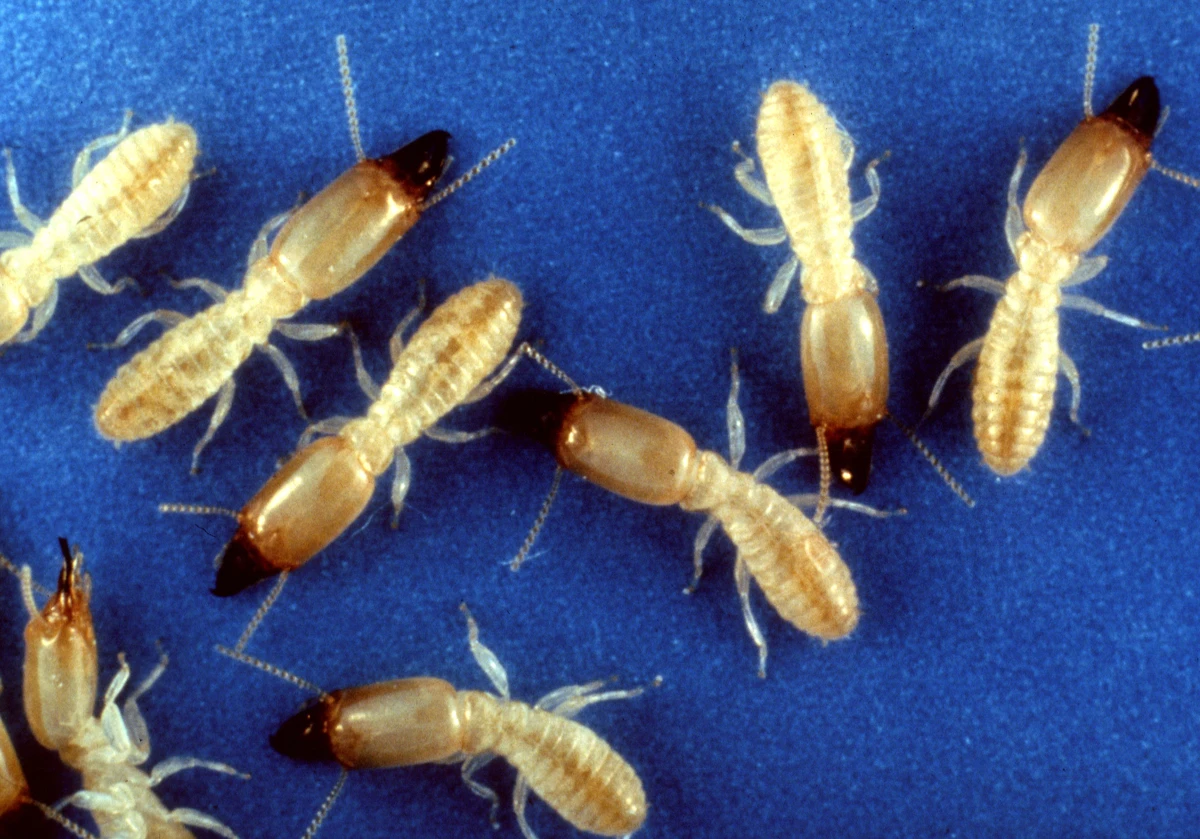
Photo: USDA Agricultural Research Service · Source · Public domain. Resized where needed and converted to WebP; no additional crop.
Soldiers defend the colony. Eastern subterranean termite soldiers have enlarged, more strongly colored heads and prominent mandibles. Their appearance differs from the workers around them; the photograph is a reference for caste features.
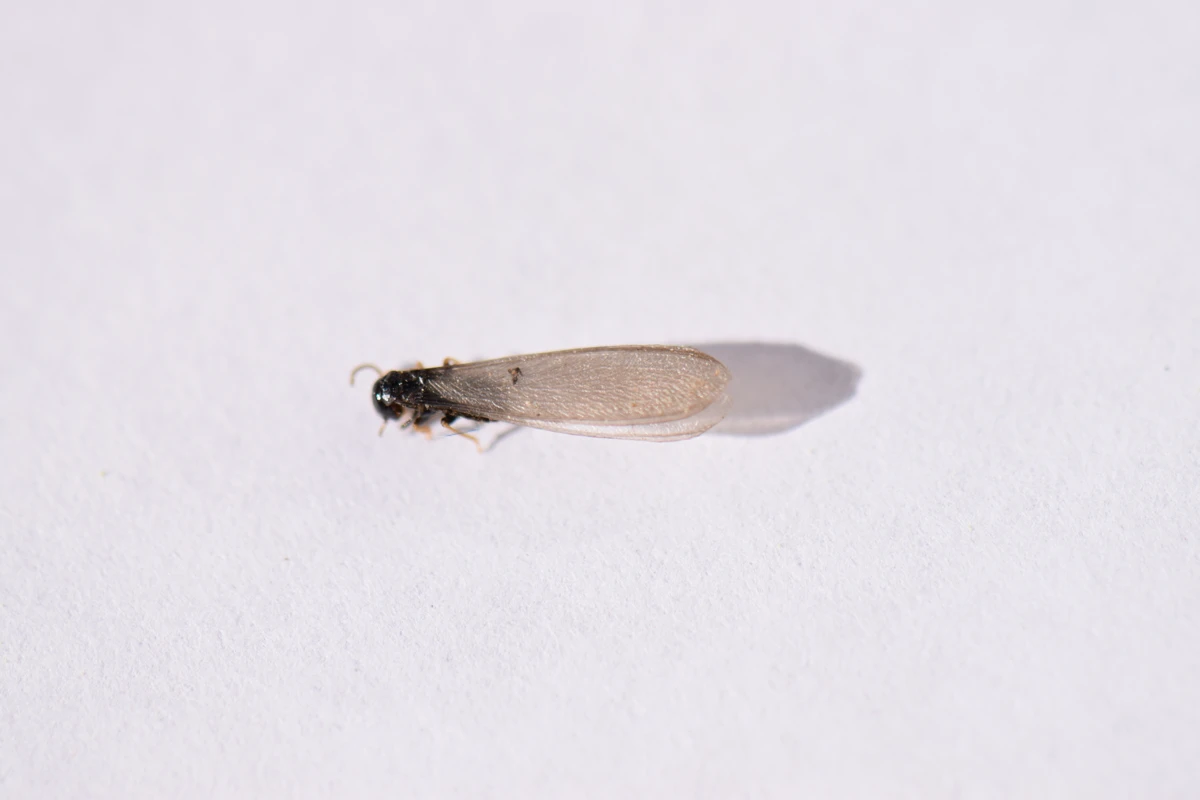
Photo: PumpkinSky · Source · CC BY-SA 4.0. Resized where needed and converted to WebP; no additional crop.
Reproductives disperse during swarming. Their darker bodies and wings look quite different from pale workers. Some surviving pairs may establish new colonies, but an individual flight does not prove that a new infestation has begun in a particular building.
Reproductive members produce offspring while workers and soldiers support different functions. Subterranean termites generally live in association with soil and use protected routes to reach cellulose-containing food, including wood. Suitable moisture is important to their survival.
The insects visible at one location represent only the portion you can observe. Workers alone are difficult to identify to species; reliable identification may require better specimens and specialist examination.
Moisture, access and visibility are practical parts of termite prevention. A leaking pipe or poorly draining area needs attention on its own merits, even when no termites have been found. A moisture reading describes a condition; it does not identify a pest.
No single maintenance measure prevents every termite problem. Reducing favorable conditions supports an inspection and management plan; it does not replace evaluating evidence that is already present.
No. Outdoor swarming can originate away from the structure. Record where the insects appeared and whether there is related evidence at the building. Emergence indoors or directly from a structural component merits closer evaluation, but the location and findings still need to be assessed.
Compare the antennae, waist and relative wing lengths together. Termite swarmers generally have straighter antennae, a broad waist and two similarly sized wing pairs; winged ants typically have elbowed antennae, a narrow waist and longer forewings. An obstructed or damaged specimen may remain uncertain.
No. A suspected tube warrants evaluation, but its appearance alone does not establish whether termites are using it now. Photograph it and leave it intact; do not break it open merely to conduct a home activity test.
Yes. Concealed framing and internal feeding can limit what is visible. An inspection depends on access and conditions at the time, so a normal-looking surface cannot establish the condition of everything behind it. Concerns about structural integrity need appropriate building evaluation.
No. Review the actual treatment and warranty records, ongoing responsibilities and any monitoring or renewal terms. Visible patch holes do not verify effectiveness, current coverage or present termite status. Continued maintenance and appropriate follow-up remain useful.
Species-level identification may require an appropriate specimen or specialist examination. A photograph is not a complete inspection.
Reference photographs are identified by their individual credits. Source and license links accompany each image. Image adaptations carrying ShareAlike retain that image license; this does not place the entire website under that license.


