LEVEL UP PEST LIBRARY · SPIDERS
P024 · Parasteatoda tepidariorum is a particular species, not a name for every spider indoors. Understanding its web and sheltered habits can make a familiar corner less mysterious.
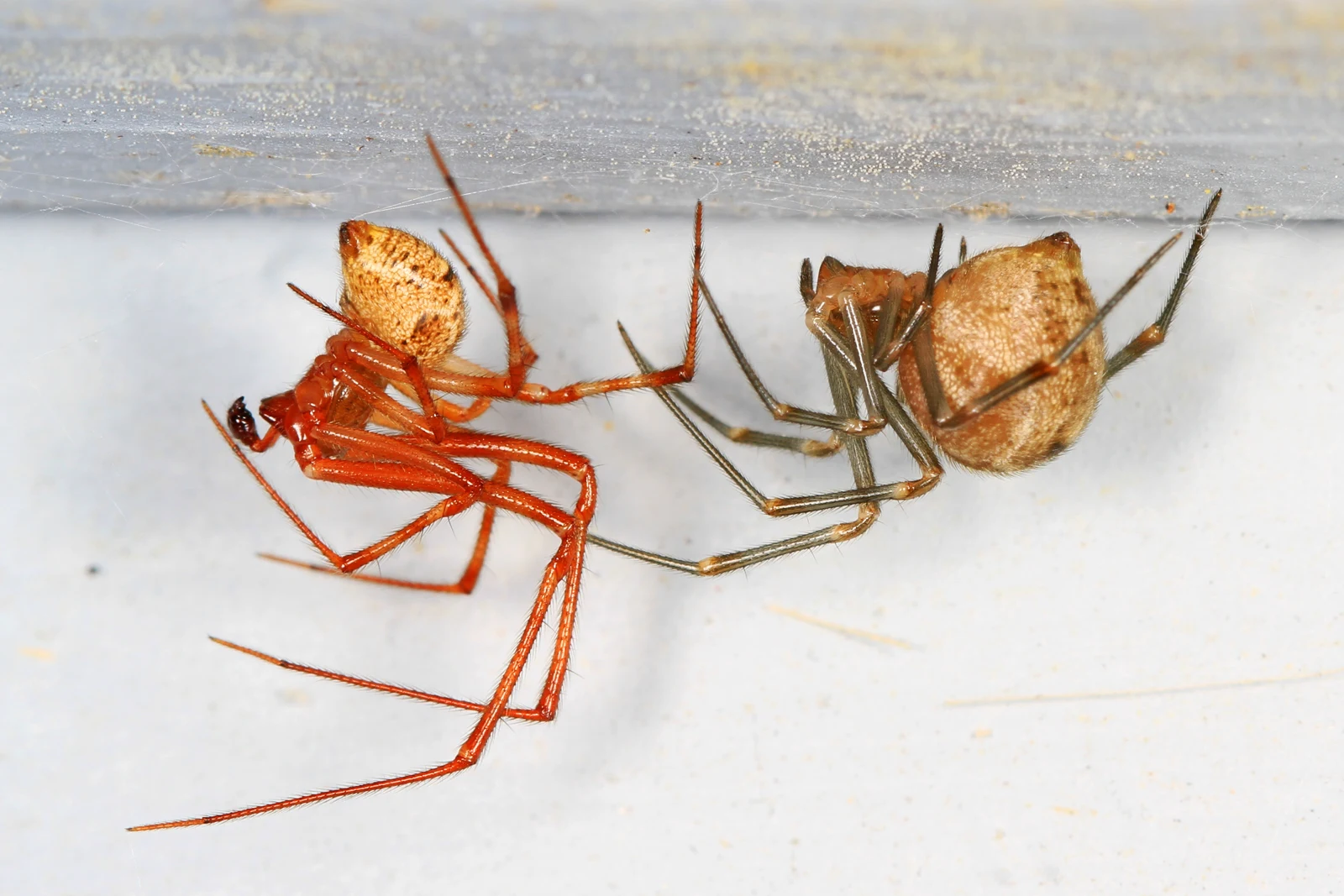
The rounded abdomen is often mottled, and the slender legs can show bands. Color and pattern vary, so compare the whole animal rather than one dark patch.
This photograph documents the species in Maryland. It does not establish that an unidentified spider at your property is the same species.
Cellar spiders, funnel weavers, and other spiders may all be called house spiders in conversation. Use the scientific name when a specific identification has been established.
Common house spiders and widows both belong to the cobweb-weaver family. Their shared web style is not a reason to treat them as interchangeable.
The web is an irregular three-dimensional tangle used to capture prey. Quiet corners, eaves, and protected spaces around structures can provide attachment points. A visible web may be occupied or abandoned; look for actual observations rather than assuming the condition of the silk tells the whole story.
Spiders feed on other arthropods. Repeated webbing can reflect continued shelter and prey access, so cleaning alone may not explain why the location is reused. An outside corner near insects is different from repeated activity in a room.
UF/IFAS describes light-brown, pear-shaped egg sacs suspended in the web of this species. The sac is a silk enclosure, not a miniature spider or a measure of how many adults inhabit the building.
Egg-sac appearance can be informative when connected to a verified adult, but a photograph of an unknown round object should not be labeled by resemblance alone. Do not open sacs or disturb a suspected widow to compare them.
Begin with the place and the practical concern. An outdoor web away from contact may be left alone. Recurring indoor webs may justify checking screens, access gaps, storage arrangements, and actual insect activity.
Keep frequently used objects accessible, maintain routine cleaning in safe areas, and avoid reaching behind undisturbed materials without looking. These are sensible property habits, not a promise of a spider-free building.
If the spider cannot be distinguished from a widow or another species of concern, leave the identification unresolved and seek help. A suspected bite belongs with a medical professional, regardless of which common name someone used.
No. The name in this profile refers specifically to Parasteatoda tepidariorum. Several unrelated spiders can occur in buildings.
No. Many cobweb-building spiders make irregular silk. The spider’s identifying features matter.
They are generally described as light-brown and pear-shaped, suspended in the web. That description is not enough to identify an unknown object without context.
Shelter, attachment points, and prey access can remain after silk is removed. Review the setting and repeated observations rather than assuming every thread represents a new infestation.
When the image is unclear, a widow is suspected, or persistent indoor activity raises a practical concern. Send an existing safe photograph and the location; do not handle a spider to improve the view.
If you can photograph the spider without approaching or disturbing it, send the original image and describe where it was found. A wider view helps explain the setting. Do not handle a suspected widow or recluse to expose a marking, obtain a measurement, or improve the photograph.
We can help evaluate the evidence and whether further identification or a property assessment is appropriate. A photograph may narrow the possibilities without resolving the species. Medical symptoms belong with a clinician; do not wait for pest identification before seeking needed care.
The photographs are third-party identification references, not Level Up field photographs or records of Hampton Roads infestations. Images are not shown at a common physical scale. Credits beneath each image link to its original title, creator record, and license. ShareAlike applies to the identified images, not the entire website.

