Cockroaches: Identification & Prevention

A cockroach sighting raises two useful questions: what kind is it, and where is it coming from? An indoor breeding problem calls for a different response from an outdoor cockroach that wandered inside.

Compare identifying features, recognize activity, and reduce the food, moisture and shelter that help cockroaches persist. A clear photograph can help with preliminary identification.

Cockroaches you may encounter

For Hampton Roads homeowners, the useful distinction is an indoor breeding species versus a cockroach associated with outdoor shelter. The Virginia species below can look similar at a glance. Color alone is not enough: compare markings, size, location and repeated activity.

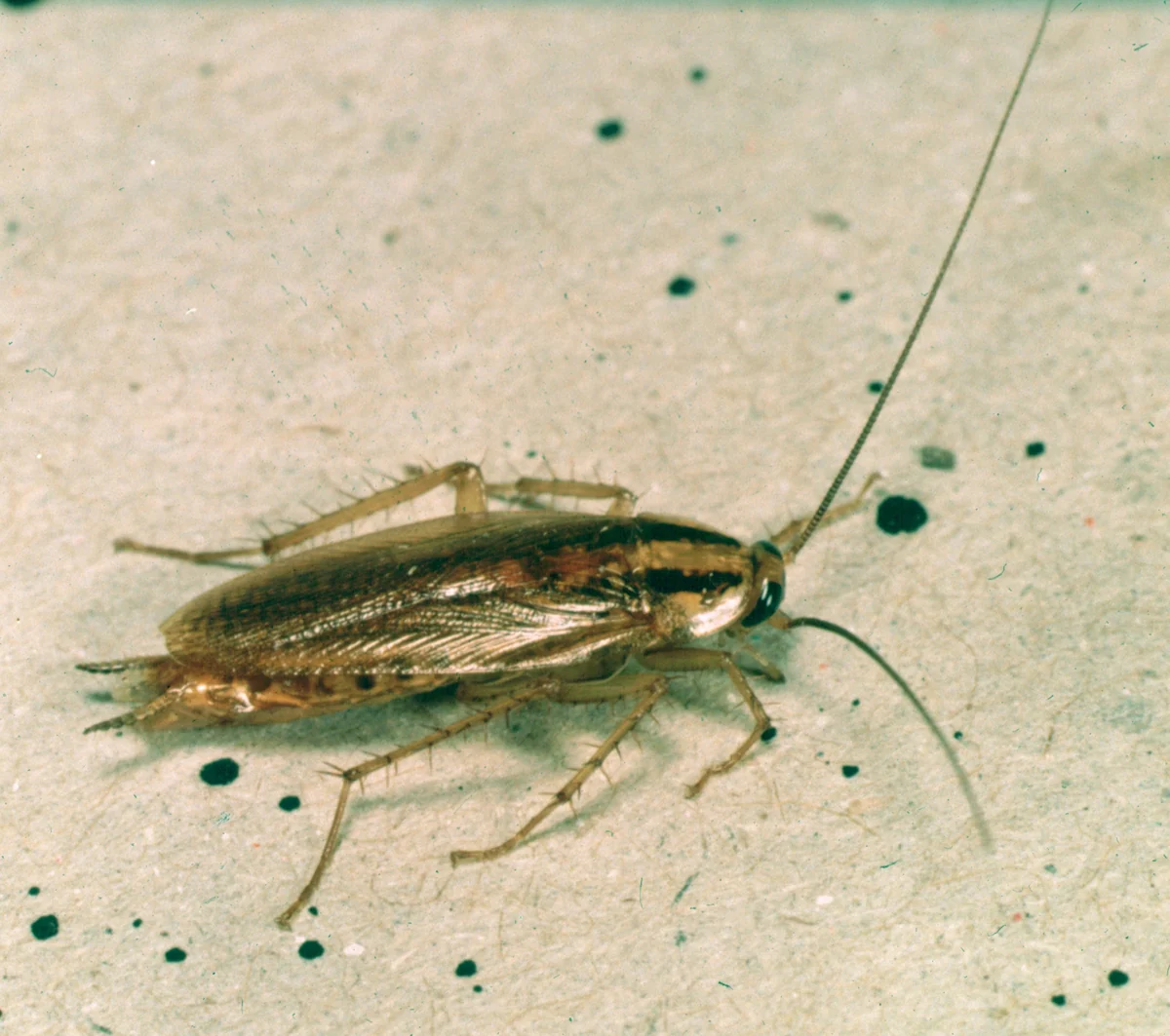
Adult German cockroach showing two dark parallel stripes behind the head.
Clemson University – USDA Cooperative Extension Slide Series / Bugwood.org · CC BY 3.0 US. Resized; no crop.

Small, tan to light brown adults have two dark parallel stripes just behind the head. German cockroaches breed indoors and often concentrate near food, water and warm appliances. Repeated sightings of small nymphs deserve attention.

American cockroach with reddish-brown wings and a pale marking behind the head.
Alex Wild / Insects Unlocked, University of Texas at Austin · CC0 1.0. Resized; no crop.

A large reddish-brown cockroach with a pale area behind the head. American cockroaches may enter from damp exterior or utility spaces. Identify the insect and investigate entry points rather than assuming every large roach is the same species.
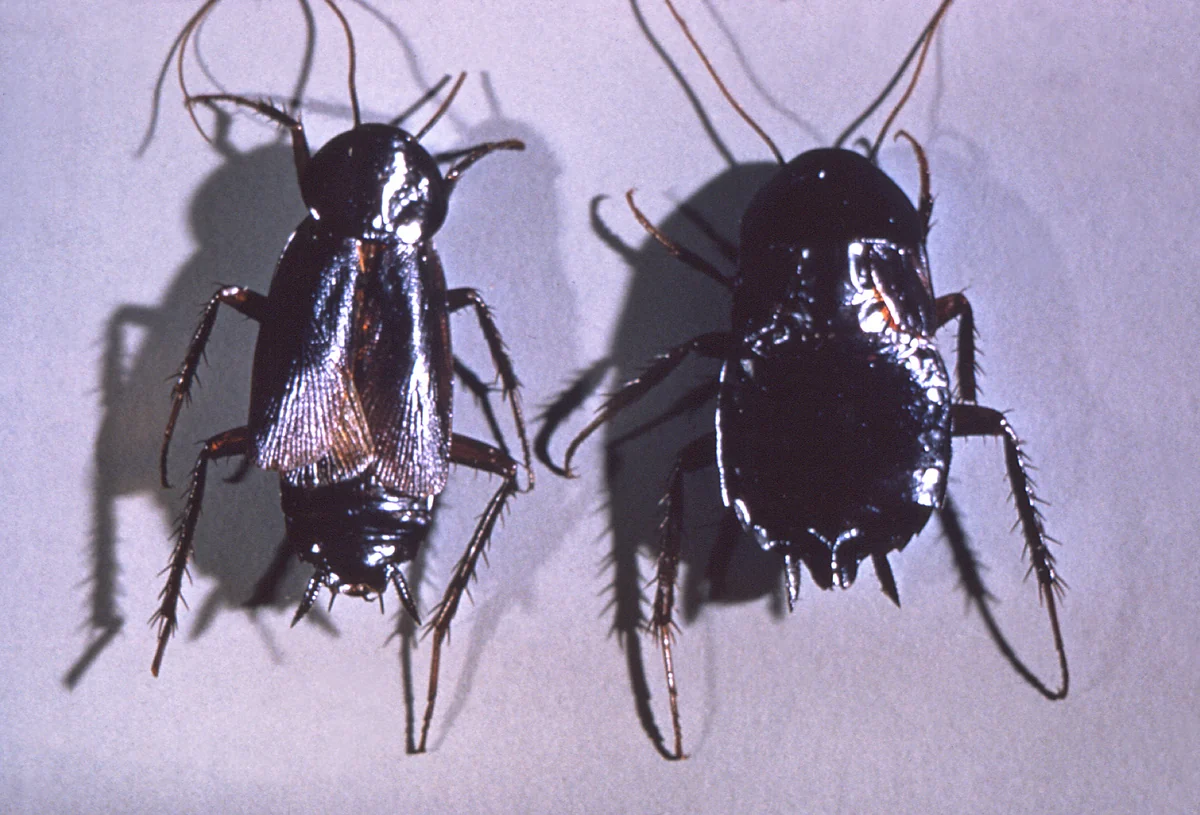
Male and female Oriental cockroaches showing different wing lengths.
CDC, PHIL 5462; photographer not named · Public domain (US federal work). Resized; no crop. Source: CDC. Available free from CDC PHIL. Use does not imply endorsement of Level Up Home Services by CDC, HHS or the U.S. Government.

Dark brown to nearly black, with a shiny appearance. Oriental cockroaches are associated with cool, damp shelter. Moisture problems and openings near ground level are useful places to investigate when they appear indoors.

Smokybrown cockroach with a dark, unmarked shield behind the head, resting on wood.
“Periplaneta fuliginosa (Serville, 1839) Smoky Brown Cockroach” — Len Worthington · CC BY-SA 2.0. Resized and converted to WebP; no crop.

Adults are a fairly uniform dark mahogany brown. Smokybrown cockroaches are associated with outdoor shelter and may enter buildings. A photograph showing the whole insect helps distinguish them from other large brown cockroaches.

Brown-banded cockroach viewed from above, showing pale transverse bands.
CDC, PHIL 6322; photographer not named · Public domain (US federal work). Resized; no crop. Source: CDC. Available free from CDC PHIL. Use does not imply endorsement of Level Up Home Services by CDC, HHS or the U.S. Government.

A small indoor cockroach with lighter bands across the body or wings. Brown-banded cockroaches may use warmer, drier locations beyond kitchens, including furniture. Look beyond the sink area when assessing repeated activity.

Pennsylvania wood cockroaches, an example of the wood cockroach group.
Happy1892 · CC BY-SA 4.0. Resized; no crop.

Wood cockroaches live outdoors in places such as leaf litter and decaying wood. Adults can resemble American cockroaches; pale edging behind the head is a useful clue. An occasional visitor does not by itself establish an indoor infestation.

Signs worth paying attention to

A single sighting is a starting point, not a complete diagnosis. Look for a pattern and record what you find before cleaning it away.

Repeated sightings: note the room, time and nearby appliances or plumbing.

Small nymphs: young cockroaches of different sizes can help reveal ongoing activity.

Droppings: dark specks or smears near hiding places warrant closer inspection; debris alone is not a reliable identification.

Egg cases or shed skins: photograph suspected evidence and keep the location in your notes.

Activity near shelter: check accessible cabinet edges, appliance surroundings and plumbing openings without dismantling equipment.

Why cockroaches enter buildings

Cockroaches need shelter and resources. Cleanliness helps, but it does not make a building immune to pests.

Food and moisture: crumbs, grease, pet food, leaks and condensation can sustain activity.

Entry and hiding places: door gaps, damaged screens, pipe openings and clutter give cockroaches routes and cover.

Hitchhiking: boxes, used appliances and other belongings can bring indoor cockroaches into an otherwise clean home.

Practical prevention that helps

Focus on manageable changes you can keep doing. Reducing resources and closing entry points supports a longer-term solution.

Store food securely. Seal opened packages, wipe spills and clear food debris from accessible surfaces.

Address moisture. Repair or report leaks and dry wet areas where practical.

Reduce clutter. Recycle unnecessary cardboard and keep storage areas accessible for inspection.

Close entry gaps. Maintain screens and door sweeps and address openings around utility penetrations appropriately.

Avoid spreading the problem. Do not move suspected infested appliances or belongings between rooms without guidance.

When professional help makes sense

Repeated sightings, young cockroaches or activity in several locations are good reasons to seek identification and an assessment. In shared buildings, property management may need to coordinate access and address conditions beyond one unit.

Level Up can review your concerns and recommend the next step. Send clear photographs or contact us to discuss what you are seeing. Any proposed service and price will be explained before work begins.

Make your observations useful

A useful photo shows the whole insect in focus, with a size reference nearby if you can add one safely. Include where and when you found it. Avoid handling an unknown insect simply to get a closer picture.

A photograph can support preliminary identification, but it may not show every feature needed to confirm the species. A specimen or closer inspection may sometimes be needed.

Start with identification

The right next step depends on the species and the evidence. Combine identification with food, moisture and entry-point improvements; do not assume a sighting proves poor housekeeping.

Cockroach questions, answered

Not necessarily. An outdoor cockroach may wander inside, while repeated sightings, nymphs or egg cases suggest a closer look is needed. Identification and the pattern of activity matter more than a single sighting.

Yes. They can arrive in boxes or used items, enter through building gaps, and find small sources of food or moisture. Cleaning supports prevention, but a sighting is not a judgment about housekeeping.

Adult German cockroaches are small and tan with two dark stripes behind the head. Other species have different markings and habits. Send a clear photograph and tell us where you found it; size or color alone may not settle the identification.

Keep food sealed, reduce accessible crumbs and moisture, and note where activity occurs. Do not move suspected infested belongings between rooms. Follow the preparation guide supplied for your particular service, and let us know about any preparation limitations.

Yes. Email clear photographs to leveluptidewater@gmail.com for complimentary preliminary identification. Include the approximate size, location and timing of the sighting. We will explain the next step and any proposed service and price before work begins.

Helpful next steps

Pest control services

Explore our existing service options and how to contact Level Up for help.

View pest control services

Preparation and resources

Use our resources hub for available educational and service-preparation information. Follow the instructions supplied for your specific service.

Browse resources

Help identifying a pest

Email clear photographs for complimentary preliminary identification, or call to discuss your concerns.

Email pest photographs · Call (757) 920-3510