LEVEL UP PEST LIBRARY · SPIDERS
P023 · A brown spider in Hampton Roads is not automatically a brown recluse. This profile separates verified range information, useful anatomical clues, and medical questions that a spider photograph cannot answer.
Virginia Tech’s revised July 2026 guidance places the natural range of Loxosceles reclusa at Virginia’s extreme southwestern tip. Isolated introduced populations have been confirmed elsewhere in the state. This does not make the species common or routinely established in Hampton Roads.
An introduced occurrence is location-specific evidence. It does not establish a neighborhood prevalence rate, identify a spider found nearby, or prove that transported belongings caused an infestation.
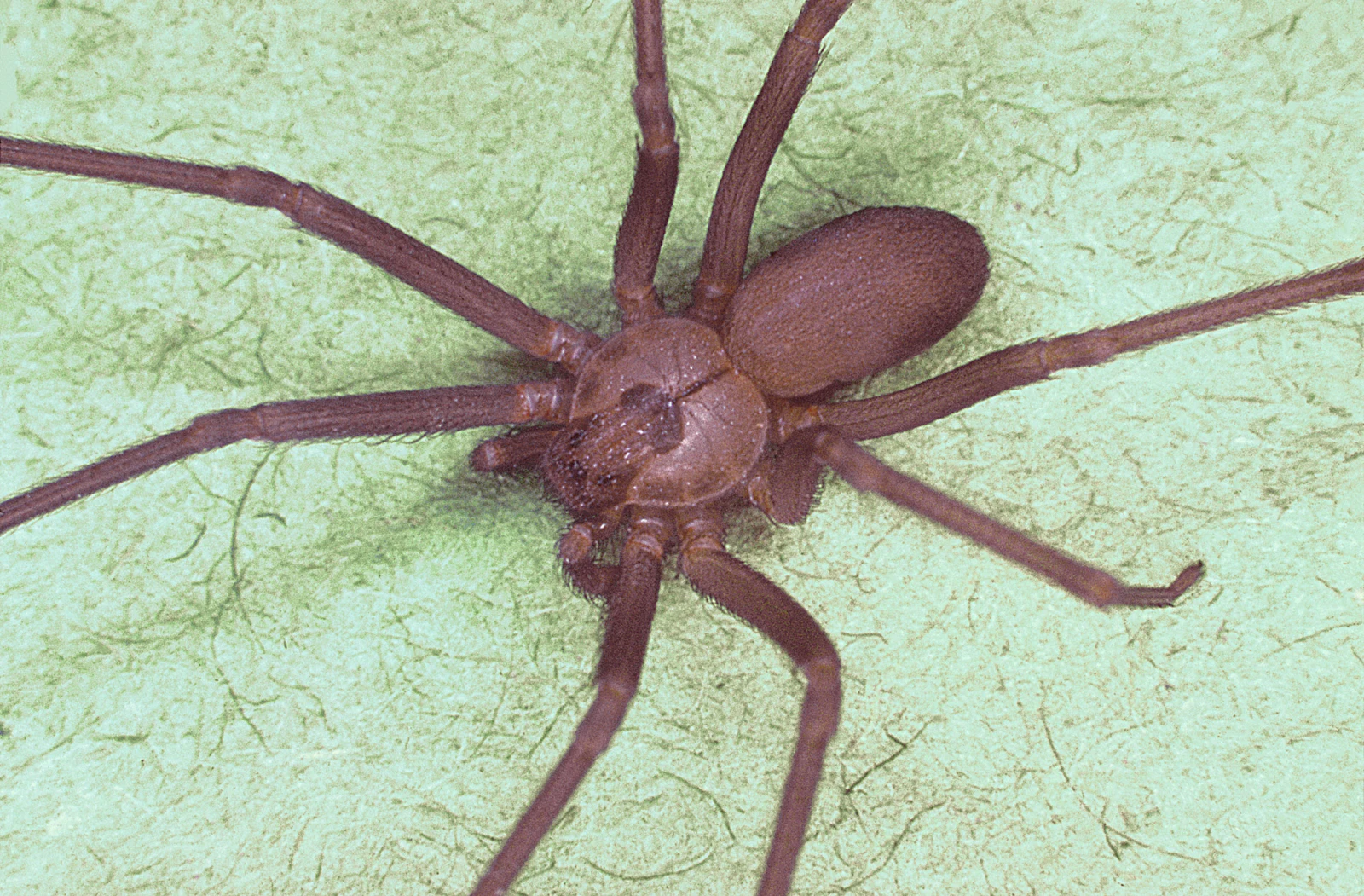
This CDC reference illustrates the species; it is not a Level Up or Hampton Roads field record.
Uniform legs, an unpatterned abdomen, fine hairs, and six eyes in three pairs are considered together. Other spiders can share individual features. Eyes may require magnification; do not approach a living spider to count them.
Wolf spiders, nursery web spiders, and funnel weavers are frequently mistaken for recluses. Clearly visible leg bands or body patterns can be inconsistent with recluse identification, but shadows and blur can mislead.
A dark patch that resembles a violin does not settle the question. An expert may be able to exclude a recluse without naming the exact species. That is still a useful answer.
If you already have a photograph taken without disturbing the spider, retain the original. A crop can highlight the animal, but keep the uncropped version too because it may show its setting. Avoid filters, artificial sharpening that changes details, or generated enhancements presented as observed anatomy.
State what the image cannot show. “The eyes are not visible” is useful. “It must have six eyes because the app said recluse” is circular reasoning. An automated label should be treated as a suggestion requiring review, not as evidence that hidden features were examined.
Do not place a coin or ruler beside a live spider for scale. If the photograph includes an existing familiar object, mention it cautiously. Otherwise, leave the measurement approximate or unknown. A smaller claim that is accurate is more useful than a precise-looking guess.
Record the date, room or outdoor location, and whether the spider was moving or resting. Note recent relocation of furniture or stored belongings if relevant. Do not rearrange the space to recreate the scene once the spider has disappeared.
Keep images from different sightings separate. Two people may have photographed the same spider, while two similar spiders may be different species. A simple log prevents the number of messages in a family chat from becoming the supposed number of spiders in the house.
If identification remains uncertain, ask whether the existing evidence supports an exclusion, whether a site inspection is appropriate, and how any further evidence should be obtained safely. Do not improvise capture merely because an online guide explains anatomical details.
Recluses use secluded retreats rather than conspicuous open capture webs. An absence of webbing is not evidence that one is present: many other spiders also hunt without capture webs.
Keep stored items organized and accessible, maintain screens and suitable seals, and avoid blind reaching. If a suspected spider is already on an object, postpone handling it. A confirmed individual may warrant further assessment; it does not independently establish the extent of a population.
Seek prompt medical advice for a suspected bite or concerning symptoms. Do not diagnose a skin lesion from its appearance or attribute it to a spider found later. Medical care and pest identification answer separate questions.
No. The verified Virginia range statement describes the extreme southwestern natural-range edge and isolated introductions elsewhere, not routine Hampton Roads populations.
No. Similar-looking patterns occur on other spiders. Identification relies on combined anatomical features and a suitable view.
No. It may omit the eyes, true leg markings, or other useful details. Keep the original and say which features cannot be seen.
No. Proximity is an observation. A transport history may be relevant, but species identity and evidence of establishment remain separate questions.
No. Wounds and symptoms need clinical assessment. Do not delay care while seeking a spider label or a better photograph.
If you can photograph the spider without approaching or disturbing it, send the original image and describe where it was found. A wider view helps explain the setting. Do not handle a suspected widow or recluse to expose a marking, obtain a measurement, or improve the photograph.
We can help evaluate the evidence and whether further identification or a property assessment is appropriate. A photograph may narrow the possibilities without resolving the species. Medical symptoms belong with a clinician; do not wait for pest identification before seeking needed care.
The photographs are third-party identification references, not Level Up field photographs or records of Hampton Roads infestations. Images are not shown at a common physical scale. Credits beneath each image link to its original title, creator record, and license. ShareAlike applies to the identified images, not the entire website.

