LEVEL UP PEST LIBRARY · P030
A suspicious mark on a mattress or a small insect near the bed can leave you with more questions than answers. Start with what you can actually observe. This guide brings identification references and Level Up field photographs together so you can describe the evidence and choose a sensible next step.
The common bed bug, Cimex lectularius, feeds on blood. Adults are typically about 5–7 mm long, with a flat, oval, brown body before feeding. After a meal they can appear redder, fuller, and more elongated. Young nymphs are smaller and paler; an unfed young bug can be difficult to see.
A photograph can help, but it may not capture the features needed to distinguish a bed bug from a close relative such as a bat bug. Carpet beetles and other small insects are also mistaken for bed bugs. Keep an original photograph and describe where the insect was found rather than choosing a treatment based on a resemblance alone.
Bed bugs develop from eggs through five nymphal stages to adulthood. A nymph needs a blood meal before each molt. Unlike fleas, bed bugs have no pupal stage. Development depends on temperature and access to a host; a photograph cannot tell you how long an infestation has been present.
Adult fleas can jump; bed bugs crawl and cannot jump or fly. Fleas are often associated with animal hosts and immature stages in surrounding resting areas. Bed bugs usually hide near places where people or other hosts rest and can travel in luggage, furniture, or other belongings. Neither bite patterns nor itching alone reliably identifies the pest.
Compare the kind of evidence, not just its color. These reference photographs are not shown at a common physical scale and are not Level Up customer records. They illustrate documented examples; they cannot establish the cause, age, or extent of an unknown finding in your home.

The segmented abdomen and overall body shape are visible in this adult reference. Size, feeding state, and image quality can change the appearance of a bug in your own photograph.

Photo: Thomas Oldani. Bedbug_with_eggs.jpg. Original source · CC BY 3.0. The Commons source has a documented crop/brightness history. Level Up: proportional resizing where needed and WebP encoding; no cropping or retouching. Website derivative retains the source license.
Bed bug eggs are approximately 1 mm long. This photograph shows eggs and a bug in a wooden bed’s screw hole. A pale speck by itself is not enough to identify an egg.

Nymphs shed their outer covering as they grow. The empty skin is visible on the right in this reference. Shed material can remain after the insect has moved; it does not date the activity.

This source documents bed bug fecal staining on a bed corner. Similar-looking spots can have other causes. Consider the marks alongside insects, eggs, cast skins, and the surrounding location.
Small reddish or rusty smears on bedding can occur when a recently fed bed bug is crushed, but blood marks have other causes and cannot confirm bed bugs on their own. These marks are different from the dark fecal spots shown in the preceding card.
Look for corroborating evidence: an identifiable insect, eggs, or cast skins near seams and hiding places. Photograph the mark and its surroundings before cleaning. No verified bloodstain photograph is presented here.

This reference shows bed bugs with eggs in a sheltered area. Check mattress piping, box-spring seams, bed-frame joints, headboards, and nearby furniture crevices. Bed bugs can also shelter behind wall decorations and in other narrow spaces near resting areas; they are not confined to the mattress.
Several types of evidence together are more informative than one isolated stain. Avoid moving suspect furniture into another room. Leave electrical fixtures closed and arrange a professional evaluation rather than opening or treating them yourself.
The following photographs were supplied as original Level Up field photography. Captions distinguish the owner’s inspection identification from what a photograph alone can establish.
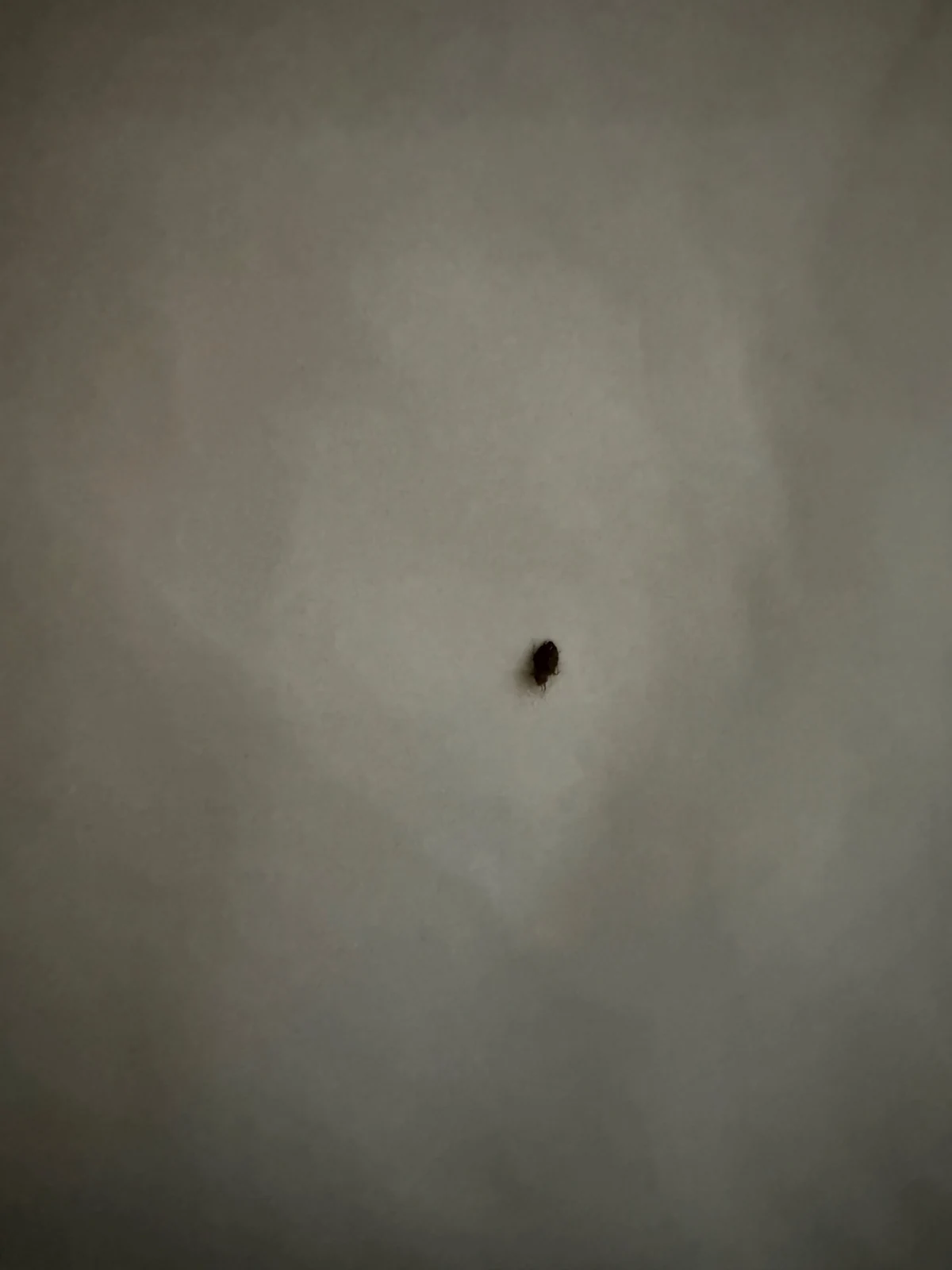
An insect identified during a Level Up field inspection as a bed bug. Their small size and concealed behavior can make them difficult to notice, particularly when an individual insect is encountered away from a typical hiding place.
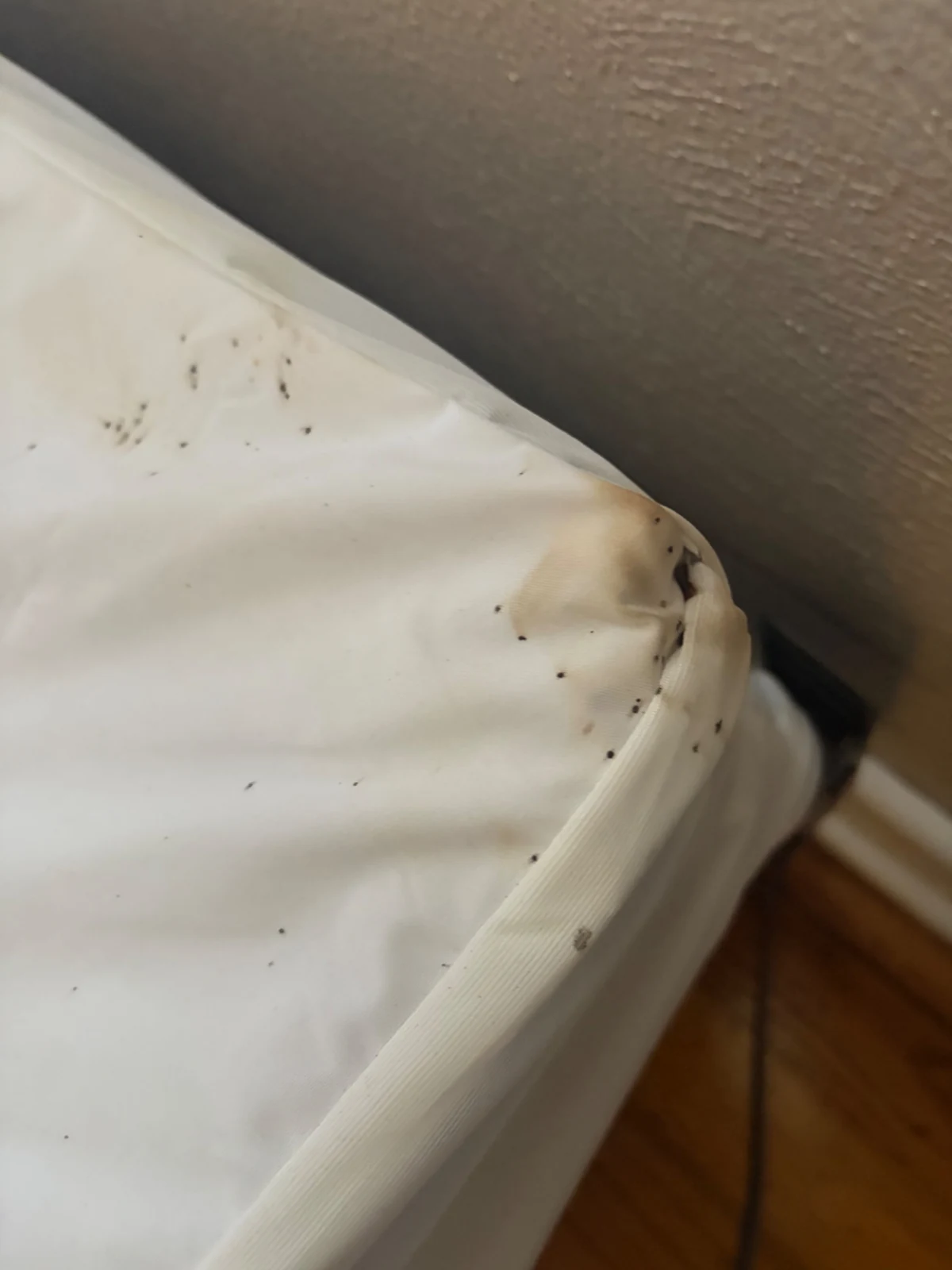
Dark spotting observed along a mattress-cover seam during a Level Up inspection. Bed bug fecal deposits may be concentrated around seams and other protected areas, although similar-looking marks can have other causes.

Clusters of dark marks observed on mattress-cover fabric. Their appearance and distribution may help guide an inspection, but reliable identification should consider additional evidence rather than relying on staining alone.
Bed bugs often shelter close to places where people sleep or rest. Mattress seams, bed frames, headboards, and furniture crevices can offer protected spaces. Their presence is not a measure of housekeeping: they can travel in luggage, clothing, bedding, and furniture.
Bite-like marks cannot identify the pest. Reactions vary, and some people show no visible reaction. Bed bugs are not known to spread diseases to people, but bites can cause itching and disrupted sleep. Seek medical advice for concerning skin symptoms or a suspected allergic reaction rather than relying on a pest photograph for a diagnosis.
A useful report separates observation from interpretation: “dark marks at the mattress seam” is more precise than guessing an infestation size. Tell us what you found, what has changed, and whether any products have already been used.
A management plan begins with identification and an assessment of the affected spaces. Access, preparation, and follow-up arrangements should be clear before service begins. We will explain the proposed work and price rather than treating every photograph as proof of the same problem.
These photographs document professional field work. They are not do-it-yourself instructions. Do not remove electrical covers or apply products inside fixtures. No pesticide, electrical isolation condition, or particular application method is established by these images.
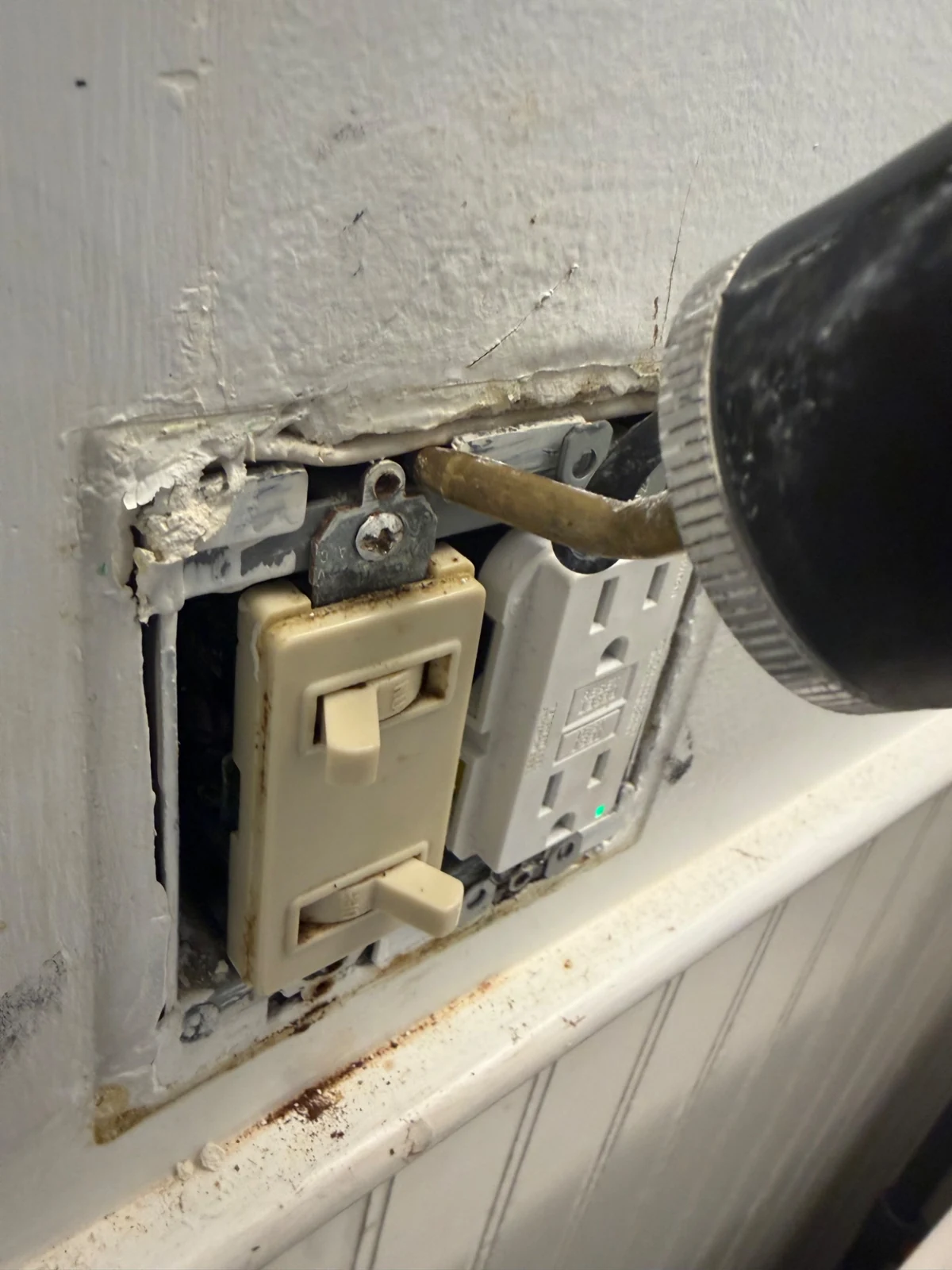
Professional service involving a concealed area around an electrical fixture. Bed bugs may occupy protected spaces away from mattresses, which is one reason thorough evaluation can be important.

Professional pest-control service involving the underside of upholstered furniture. Bed bugs can occupy concealed furniture components, making a complete understanding of potential hiding areas important.
No. Skin reactions can have several causes, and people react differently. Identification should rely on insect evidence; concerning symptoms need medical advice.
No. Spots are a reason to look more carefully, not a diagnosis. Clear photographs and additional physical evidence help separate possibilities.
Yes. They can arrive with belongings and are not evidence of poor housekeeping. Organized spaces can make inspection easier.
Not automatically. Moving or discarding items without a plan can spread bugs. Obtain advice about the affected items before moving them through the property.
Yes. Email the original images with a brief description of where you found the evidence. Preliminary photo identification is complimentary, but an image may not resolve the finding. A professional bed bug inspection is a separate service; we confirm the scope and price before work begins.
Creator, source, and license credits appear beneath each reference image. The website copies have been proportionally resized where needed and encoded as WebP without cropping or retouching. Each licensed derivative remains available under the license linked with it. Level Up field photographs remain company-owned. No endorsement by third-party photographers is implied.


